Executive summary
- The board of U.S. Steel, owned by Nippon Steel, has approved full funding of nearly $3 billion for a new hot strip mill at the Edgar Thomson Plant of its Mon Valley Works near Pittsburgh. U.S. Steel announced it on 22 October; Nippon Steel followed on 23 October.
- The company says annual capacity rises from about 2.2 million tons to about 3.5 million tons. Construction starts once permits are granted, and first production is expected in late 2029.
- Nippon Steel calls the project a concrete step in its $11 billion U.S. Steel investment plan, which the 2025 National Security Agreement sets for completion by 2028.
- For European buyers this is a long-dated signal, not a near-term supply change: US hot-rolled coil supply deepens behind a 50% Section 232 duty, so the US market stays hard to reach for imported flat steel.
Key numbers
~$3bn Funding approved by the U.S. Steel board for the new hot strip mill FactU.S. Steel, 22 Oct 2026
3.5m tons Annual capacity after the project, up from about 2.2 million tons (company units) FactNippon Steel, 23 Oct 2026
+1.3m tons Increase in annual capacity Calc.from U.S. Steel figures
Late 2029 Expected start of production, after permits FactU.S. Steel
$11bn Nippon Steel’s committed U.S. Steel investment plan, due by 2028 under the National Security Agreement FactU.S. Steel/Nippon Steel, 13 Jun 2025
50% US Section 232 duty on steel articles under Proclamation 11021 FactFederal Register, 9 Apr 2026
Fact = supported by the cited primary source or clearly attributed reporting/market assessment · Calc. = Loharo calculation from cited figures · Uncertain = an attributed claim not independently confirmed · Analysis = interpretation or forecast with sourced premises.
What happened
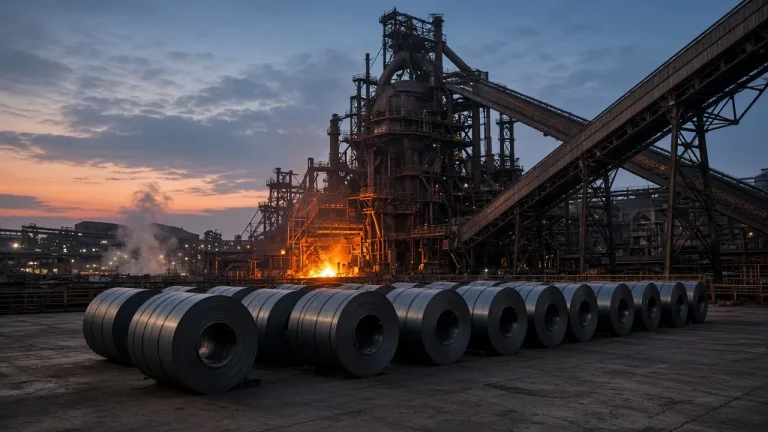
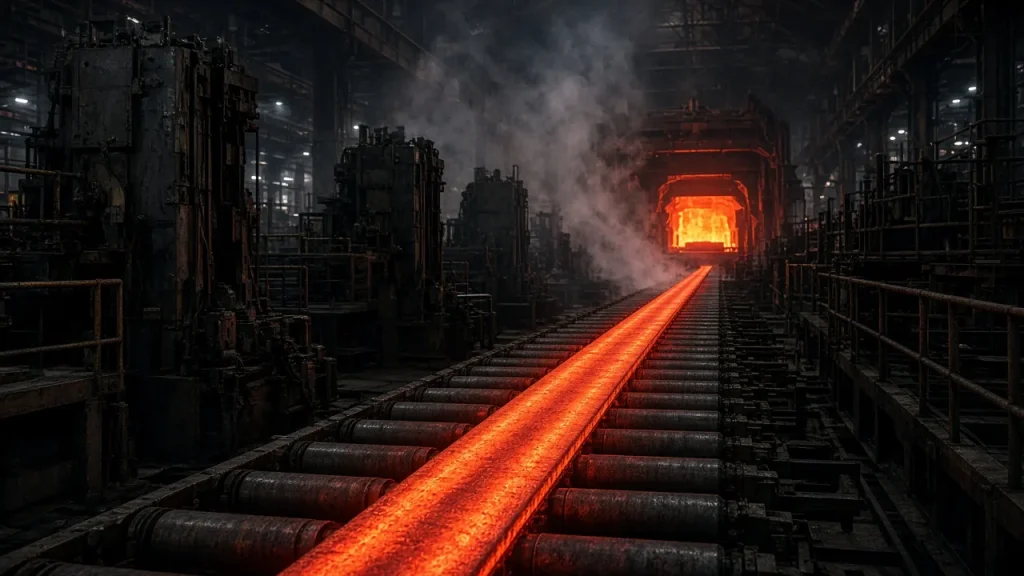
On 22 October 2026 U.S. Steel said its board had approved full funding for a new hot strip mill at the Edgar Thomson Plant, part of Mon Valley Works in western Pennsylvania. The investment is close to $3 billion. A hot strip mill reheats slabs and rolls them into coil for cars, appliances, line pipe and construction.
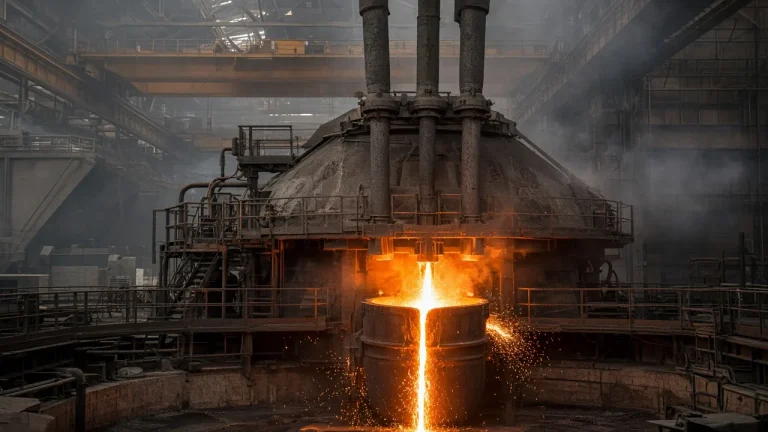
The new mill replaces ageing equipment. U.S. Steel puts annual capacity at about 2.2 million tons today and about 3.5 million tons once the mill runs; the company gives its figures in tons without further detail. New walking beam reheating furnaces and an in-line slab sizing press are meant to cut fuel use, remove a cutting step and reduce scrap. Building starts after the permits are issued, with first production planned for late 2029.
Reach steel buyers and importers worldwide
Put your brand in front of the people who buy and trade steel.
Advertise with LoharoIts parent, Nippon Steel, described the mill on 23 October as one of the concrete steps in its committed $11.0 billion investment plan across the U.S. Steel footprint, and named automotive, home appliance and energy customers as the target. The National Security Agreement signed when Nippon Steel took over U.S. Steel in June 2025 provides for about $11 billion of new investment by 2028. Reuters, citing the Nikkei, reported that the existing hot-rolling equipment has been running for about 90 years; we could not confirm that figure with the company.
The permit is still open. The Allegheny County Health Department’s public notice describes a new hot strip mill with two walking beam furnaces and a rated capacity of 3.5 million tons a year. It says U.S. Steel intends to partly offset the added emissions by stopping the hot strip mill at its Irvin plant. The department will hold a public hearing in Braddock on 10 November and accepts written comments until 17 November. The Allegheny Front reports that local residents and council members object to the extra pollution at Edgar Thomson.
Why it matters for European buyers
Analysis Nothing changes in European supply before 2030. The value of the news is as a signal of where a top-three global producer is putting its money: into US flat-steel capacity for cars, appliances and pipe, behind a tariff wall. Under Proclamation 11021 the US has charged 50% Section 232 duty on steel articles since April 2026 (our landed-cost guide works through what that means for an HRC importer).
Analysis More and better US hot-rolling capacity makes it less likely that the US reopens to imported coil in the next few years. Steel that cannot go to the US has to find other markets, and the EU remains a large, comparatively open market, which is why its quota and safeguard rules matter so much (see our trade defence explainer). The Mon Valley mill adds to that pressure only slowly, and only once it runs.
Analysis For European buyers who buy from or compete with Nippon Steel group companies, the project shows the group’s capital going to its US arm. Watch whether that leaves less room for spending elsewhere in the group; the company has not said anything about this.
Who is affected
- European flat-steel exporters: the US remains a high-duty market, and more domestic hot-rolling capacity from 2029 makes a later opening less likely.
- EU buyers of HRC and coated coil: no direct effect now; the indirect effect is through trade diversion if US self-sufficiency grows.
- Automotive, appliance and line-pipe supply chains with US plants: U.S. Steel is aiming its new capacity at these customers.
Stay ahead of the steel market
What to watch
- 10 November: the Allegheny County Health Department hearing in Braddock; written comments close on 17 November. A permit delay would push back the late-2029 start.
- Nippon Steel’s next results: any update on how the rest of the $11 billion plan is spent and phased.
- US Section 232 changes: any change to the 50% rate or its exemptions would matter more for European exporters than this mill.
Verification status: Verified
- Material factual claims are supported by appropriate primary sources or clearly attributed reporting and market assessments; Loharo analysis is labelled separately. Last fact-check: 24 October 2026.
- Key: Verified = material factual claims are supported by an appropriate primary source or clearly attributed reporting/market assessments; Partially verified = a specific material claim remains unsupported, contradicted or materially overstated; Analysis = interpretation or forecast with sourced premises; Developing = material facts are checked but the situation is still changing.
Ask the Analyst
“1,000 t HRC from Japan into Houston”: landed cost with duty, quota and CBAM in one answer.Ask the AnalystSources
Primary sources
- U.S. Steel board authorizes nearly $3 billion investment in new hot strip mill at Mon Valley Works — U.S. Steel, 22 October 2026
- U.S. Steel Board Approves Nearly $3 Billion Investment for New Hot Strip Mill at Mon Valley Works — Nippon Steel, 23 October 2026
- Public notice: proposed NSR/PSD permit for United States Steel Corporation, Edgar Thomson — Allegheny County Health Department, October 2026
- President Trump approves historic partnership between U.S. Steel and Nippon Steel (Exhibit 99.1) — U.S. Steel and Nippon Steel, 13 June 2025, filed with the SEC
- Proclamation 11021: Strengthening actions taken to adjust imports of aluminum, steel, and copper into the United States — Federal Register, 9 April 2026
Supporting sources
- Nippon Steel to spend $3 billion in U.S. Steel plant equipment upgrade, Nikkei reports — Reuters via Investing.com, 22 October 2026
- Community meeting for new hot strip mill in Braddock gets heated — The Allegheny Front, 16 October 2026
Related on Loharo
- US Section 232 steel tariffs in 2026: what an importer of hot-rolled coil pays
- Steel trade defence explained: safeguards, anti-dumping, tariff quotas and Section 232
- Global steel risk outlook by region: where demand, trade rules, energy and credit point for 2026–27
Last fact-check: 23 October 2026 (Europe/Amsterdam).