Executive summary
- EUROFER’s outlook of 1 October forecasts EU apparent steel consumption growth of just 0.1% in 2026 and 2.3% in 2027. EU steel exports to third countries fell 20% in the first half.
- Since 1 July, imports in 26 product categories have faced annual tariff quotas totalling 18.35 Mt. Shipments over quota pay a 50% duty. Some of the biggest country quotas for Q4 hot-rolled coil were reported used up within days of opening.
- Fastmarkets’ Northern Europe HRC index was €746.88/t ex-works on 7 October, as reported by EUROMETAL. That is about €46/t above its level on 8 July. Supply constraints drove the rise, not stronger end-user demand.
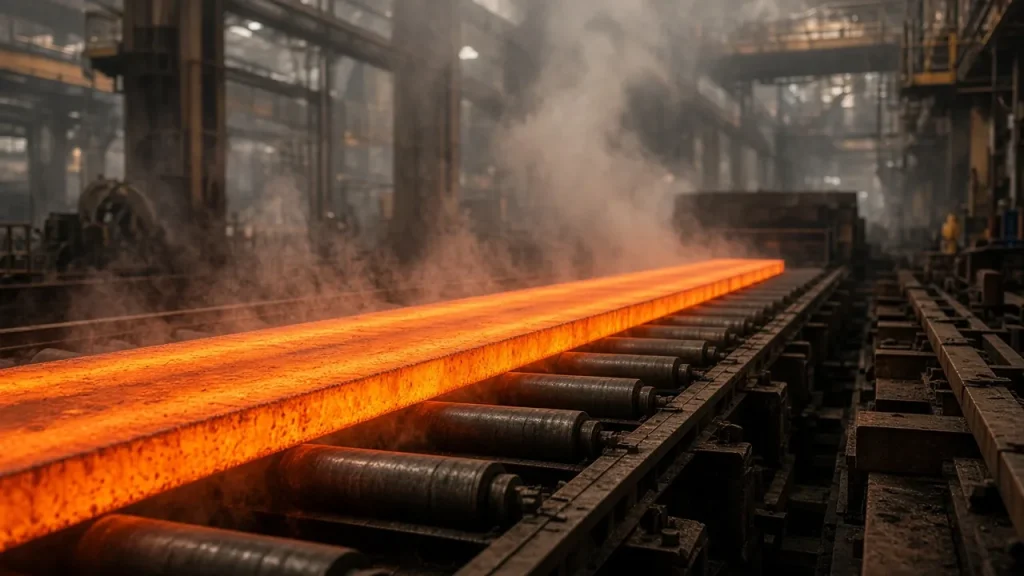
- Supply-side risks are building. The Taranto hot end has stopped, low water on the Rhine is disrupting Ruhr logistics, and EUROFER says gas prices recently peaked near €80/MWh.
Key numbers
€746.88/t Fastmarkets N. Europe HRC index, ex-works, 7 Oct FactFastmarkets via EUROMETAL
+€46/t N. Europe HRC since 8 Jul (€701.25/t) Calc.Loharo, from Fastmarkets via EUROMETAL
18.35 Mt Annual EU tariff quotas, 26 categories; 50% duty over quota FactRegulation (EU) 2026/1384, EUR-Lex
+0.1% EUROFER forecast for EU apparent steel consumption, 2026 FactEUROFER outlook, 1 Oct
Fact = checked against the cited source · Calc. = Loharo calculation from cited figures · Uncertain = reported but not confirmed. Unlabelled statements in the text are sourced facts; analysis and uncertainty are labelled inline.
What happened
Three things are hitting the European steel market at once as it enters the final quarter of 2026. Imports are restricted by law, demand is weak and uneven, and input costs are high. The European Steel Association’s Economic and Steel Market Outlook 2026-2027, published on 1 October, puts growth in apparent steel consumption at 0.1% for 2026, after a 1.5% rise in the first quarter. It expects a firmer 2.3% gain in 2027, but even then consumption would be about 7 Mt below its 2019 level. EU crude steel output fell 2.9% to a record low of 125.8 Mt in 2025, and EUROFER puts capacity utilisation at 67%.
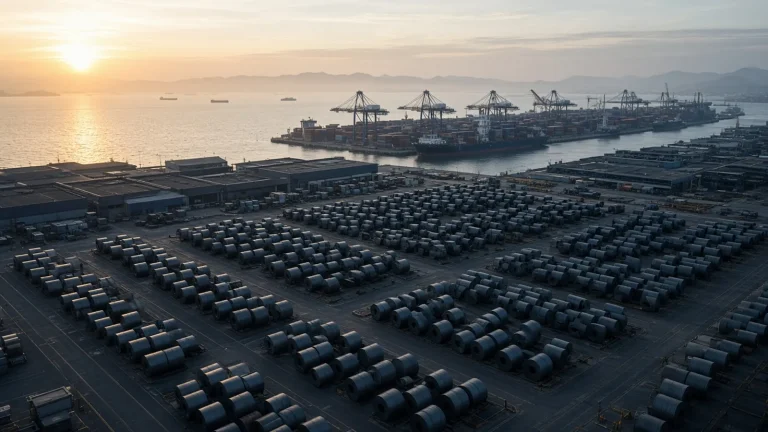
The trade framework changed on 1 July. Regulation (EU) 2026/1384 replaced the 2019 steel safeguard, which expired on 30 June. The new regime opens 18,345,922 tonnes of annual tariff quotas across 26 product categories. The quotas are managed quarterly, and imports over quota pay a 50% ad valorem duty, double the old 25% safeguard rate. Since 1 October, importers must also prove the country where the steel was first melted and poured.
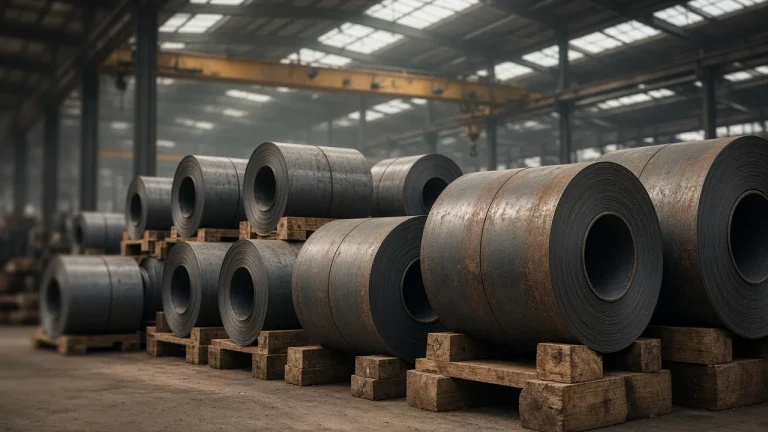
Flat products show the effect most clearly. As reported by EUROMETAL, Fastmarkets’ daily Northern Europe HRC index rose from €701.25/t on 8 July to €746.88/t on 7 October. The Italian index rose from €688.75/t to €741.25/t over the same period. SteelOrbis quota tracking, published via EUROMETAL, showed Türkiye’s Q4 country quota for hot-rolled flat products (160,573 t) used up on 1 October. Requests against India’s 149,318 t quarterly allocation were running at about 103%.
Costs are rising too. According to EUROFER, European gas traded mostly around €50/MWh before spiking to roughly €80/MWh in recent weeks, up 132% on its level at the start of the year. Brent crude settled at $104.28 a barrel on 8 October, according to The Economic Times, as the Middle East conflict continued to affect shipping. Logistics are under strain as well. thyssenkrupp Steel told Kallanish that its own barge fleet remains suspended because of low Rhine water levels, and that it is chartering shallower vessels.
Why it matters commercially
- Policy sets a floor, but demand sets the ceiling. AnalysisWith fewer import options, domestic mills have more pricing power at the margin. End users are not absorbing increases, though. Buyers in Benelux still describe €730–740/t ex-works as workable, while mills offer €740–760/t. Expect a market held in a range by supply, where a single outage moves prices more than demand does.
- Quota timing is now a cost line. Quotas are allocated first-come, first-served at the start of each quarter. A cargo that clears after a quota runs out pays an extra 50% of customs value. Contracts should state who carries that risk. Delivery windows should aim for quota opening dates, not mid-quarter.
- Q1 2027 could tighten early. SteelOrbis sources report that large volumes from Türkiye and India have already been sold for arrival in the first quarter. Some importers are therefore expected to face out-of-quota duties, and some sources expect price rises from January. Buyers who rely on imports should line up their Q1 cover now.
- Energy is a pass-through risk for EAF-based supply. GMK Center reports that high power prices are forcing some Italian plants to run at night. Higher energy costs are most likely to show up in long-product and EAF flat offers.
- Italy is losing an integrated supplier, but prices have not jumped. The Italian HRC index has eased even as Taranto stopped. That suggests weak demand is outweighing the loss of supply for now, which is a useful signal on how strong the market really is.
Who is affected
EU flat-steel buyersHigher cost Fewer import options give domestic mills more pricing power; Benelux buyers still see €730–740/t as workable.
Import-reliant buyersQuota risk Cargoes clearing after a quota runs out pay an extra 50%; Q1 2027 cover needs lining up now.
EAF producers and long-product buyersCost risk High power prices are most likely to show up in long-product and EAF flat offers.
Italian buyersMixed Italy is losing an integrated supplier, but weak demand has kept the Italian HRC index easing.
Stay ahead of the steel market.
Get our weekly briefing on global steel supply, trade policy, tariffs and market developments—with analysis of what matters to your business.
Free weekly briefing. Unsubscribe anytime. We measure opens and clicks to improve the briefing. See our Privacy Policy.
What to watch next
- Around 13 October: expected confirmation of Q4 allocations under the FTA quota pool, according to a market source quoted by SteelOrbis. This should show how much import capacity is really left this quarter.
- 20 October: Italy’s Court of Cassation hears the appeals over the Taranto hot area.
- Mid-October: China’s September customs trade data. Mysteel ship-tracking already points to record monthly export loadings.
- By 31 December 2026: the Commission must assess whether to add cast-iron tubes, some alloy and stainless wire, and forged bars to the steel measure (Article 12(1) of Regulation 2026/1384). The current country distribution act, Implementing Regulation 2026/1457, applies only until 31 December 2026, so a new allocation act is needed for 2027.
- 4 January 2027: the Commission publishes the Q4 2026 CBAM certificate price. The Q3 price was €82.32.
Verification status: Partially verified
- Regulatory, EUROFER and worldsteel figures were checked against primary sources. Price levels are proprietary Fastmarkets and SteelOrbis assessments as publicly reported by EUROMETAL and cannot be independently checked. Forward-looking comments are Loharo analysis.
- Key: Verified = every factual claim checked against a primary source; Partially verified = core facts confirmed, some figures from secondary/market sources; Analysis = interpretation; Developing = story still moving.
Sources
Primary sources
- Economic and Steel Market Outlook 2026-2027: EU steel exports fall 20% as demand outlook remains flat — EUROFER, 1 October 2026
- Regulation (EU) 2026/1384 addressing the negative trade-related effects of global overcapacity on the Union steel market — Official Journal of the EU (EUR-Lex), 17 June 2026 (OJ 24 June 2026)
- Commission Implementing Regulation (EU) 2026/1457 on the distribution of tariff quotas opened under Regulation (EU) 2026/1384 — Official Journal of the EU (EUR-Lex), June 2026
Supporting sources
- European domestic HRC prices increase as mills push September offers after quota changes — EUROMETAL / Fastmarkets, 9 July 2026
- Northern European HRC rises slightly on higher mill offers; Italian prices decline despite tight supply — EUROMETAL / Fastmarkets, 8 October 2026
- EU HRC prices remain stable, import buyers still cautious — EUROMETAL / SteelOrbis, 9 October 2026
- Oil Price Today (October 9): Crude oil dips 1% to $103 as Trump rules out Iran attack before midterm elections — The Economic Times, 9 October 2026
- German water levels remain critical in autumn — EUROMETAL / Kallanish, 9 October 2026
- Average scrap prices in Turkey rose by $28 per tonne in September — GMK Center, October 2026
Information as of 11 October 2026. Prices quoted from third-party assessments are attributed to the publisher that reported them; Loharo does not publish its own price assessments. This article is market intelligence, not investment or legal advice.