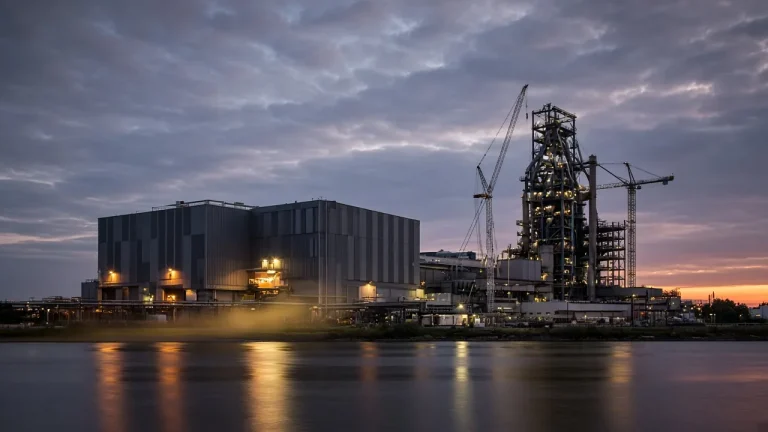
Tata Steel Nederland, the Dutch government and the province of North Holland have given themselves five more months, until 1 March 2027, to agree the state-backed deal that would fund IJmuiden’s switch away from coal-based steelmaking.
What happened
On 25 September 2026 the parties extended their Joint Letter of Intent (JLoI), first signed in September 2025, to 1 March 2027 (Tata Steel Nederland release; Dutch government notice, in Dutch). The JLoI is not binding. It is meant to lead to a tailor-made agreement and a final investment decision on the Green Steel Project.
Reach steel buyers and importers worldwide
Put your brand in front of the people who buy and trade steel.
Advertise with LoharoThe company listed the open issues:
- options for a safe and controlled closure of both coke and gas plants, discussed with the province and the environmental agency;
- a workable regulatory solution for steel slag, which Tata says has become increasingly complex under Dutch rules;
- network tariffs, and changing market and regulatory conditions, including the European Commission’s revised timetable for phasing out free CO2 allowances.
Basic engineering is nearly complete, and Tata says it is now “optimising and prioritising” spending and execution. The government says the starting points agreed last year have not changed.
Why it matters for steel buyers
IJmuiden is one of the largest flat steel suppliers to EU automotive, packaging and construction buyers. The longer the agreement takes, the later any new DRI-EAF capacity arrives and the longer the site runs on blast furnaces.
Two points stand out for buyers. Tata’s wording about prioritising spending suggests the project could be scaled or phased, so buyers should not count on firm dates for low-carbon IJmuiden coil yet. And the reference to free allowances links the project directly to EU carbon costs, which feed into flat steel prices and into CBAM costs on imports.
What to watch
- Whether a binding agreement is reached by 1 March 2027, or extended again.
- Decisions on closing the coke and gas plants, and how coke would be replaced in the meantime.
- Any change to the size or sequence of the DRI-EAF project.
Ask the Analyst
“500 t HRC from Turkey into Antwerp in January”: landed cost with duty, quota and CBAM in one answer.Ask the Analyst