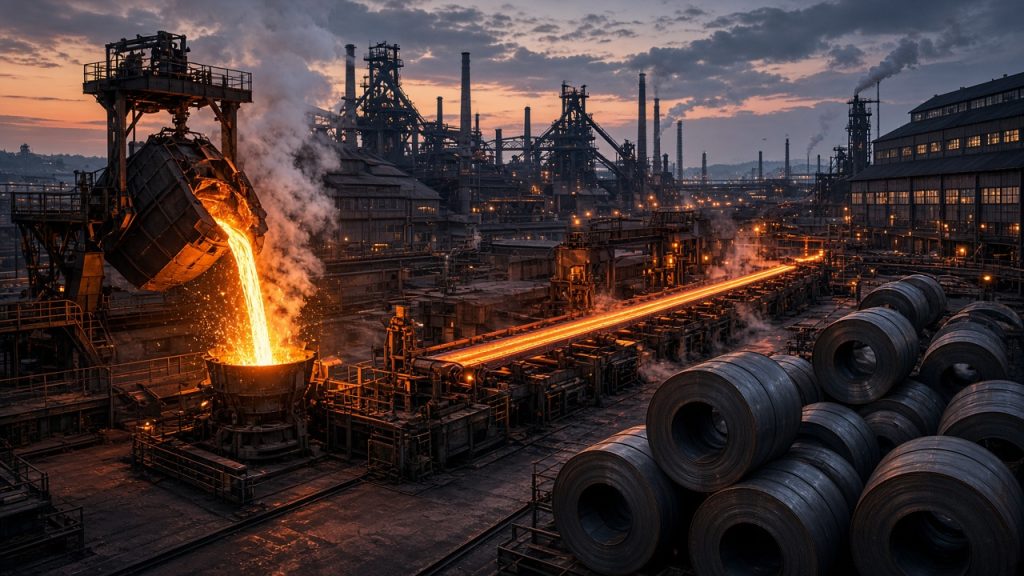
Europe’s steelmakers have restarted about 10 million tonnes of crude steel capacity in 2026, EUROFER said on 13 October, 100 days after the EU’s new steel tariff-quota measure took effect. The association calls it stabilisation, not recovery, and is now pushing for anti-circumvention rules.
What happened
EUROFER’s new president, Geert Van Poelvoorde of ArcelorMittal Europe, and the association’s vice-presidents met Trade Commissioner Maroš Šefčovič on 12 October to review the first 100 days of the measure that replaced the old safeguard on 1 July (EUROFER release).
Reach steel buyers and importers worldwide
Put your brand in front of the people who buy and trade steel.
Advertise with Loharo- Around 10 Mt of crude steelmaking capacity has resumed production in 2026, which EUROFER says helps preserve up to 80,000 jobs across the value chain.
- European producers have taken at least €3.4 billion of investment decisions this year, with a further €2.4 billion expected by year-end.
- The measure caps tariff-free imports at 18.3 Mt a year across 30 product categories, with a 50% duty above quota (European Commission).
- EUROFER still expects EU steel demand to grow just 0.1% in 2026, and says EU steel exports fell another 20% in the first half.
EUROFER did not name which plants restarted or where the €3.4 billion is going. Uncertain We could not match the 10 Mt figure to a published plant list, so treat it as the industry’s own estimate.
Why it matters for steel buyers
More domestic capacity running should, in principle, mean shorter lead times from EU mills. But EUROFER’s message to Brussels is about tightening, not loosening: it wants the measure shielded from ‘any form of circumvention’, an effective CBAM and ‘lead markets’ for EU-made steel. Buyers relying on imports should expect melt-and-pour checks and origin scrutiny to get stricter, not looser (see our guide to the tariff-quota regime and melt-and-pour).
Restarted capacity has not pushed prices down. Northern European and Italian HRC is trading around €740–750/t, with mills holding offers because import quotas are exhausted and India’s Q4 country quota ran out last week (SMM, 14 Oct). With no headroom until the January reset, EU mills keep pricing power this quarter (see European HRC prices: quota exhaustion).
What to watch
- Any Commission anti-circumvention proposal or melt-and-pour tightening following the meeting.
- Which mills account for the 10 Mt, and whether restarts hold if demand stays flat.
- Mill price targets for January, when quotas reset.
- Italian flat supply after the Taranto court hearing on 20 October (see our capacity tracker).
Ask the Analyst
“500 t HRC from Turkey into Antwerp in January”: landed cost with duty, quota and CBAM in one answer.Ask the AnalystSources
- EUROFER: European steel industry restarts 10 million tonnes of capacity in 2026 (13 Oct 2026)
- SteelOrbis: European steelmakers restart 10 million mt of capacity in 2026 (14 Oct 2026)
- European Commission: Protecting EU steelmaking
- SMM: European HRC, duty and currency risks narrow import margins (14 Oct 2026)
- Loharo: EU steel tariff-quota regime and melt-and-pour
- Loharo: European HRC prices, October 2026
- Loharo: Europe steel market outlook Q4 2026