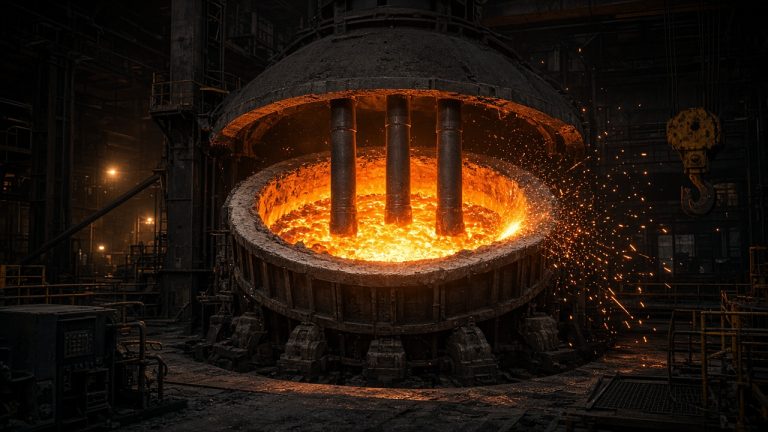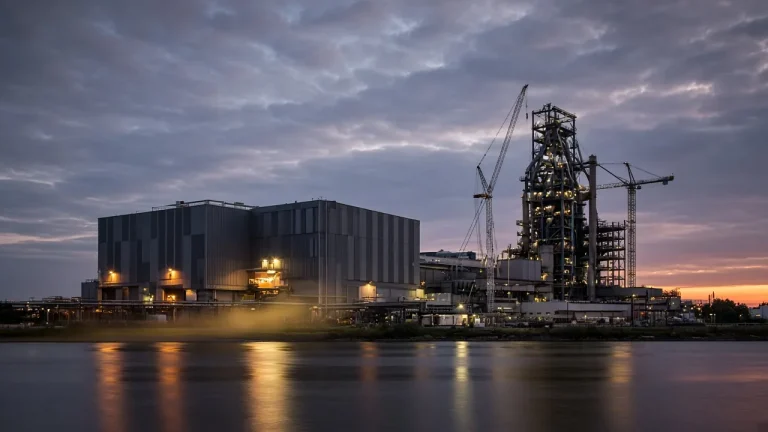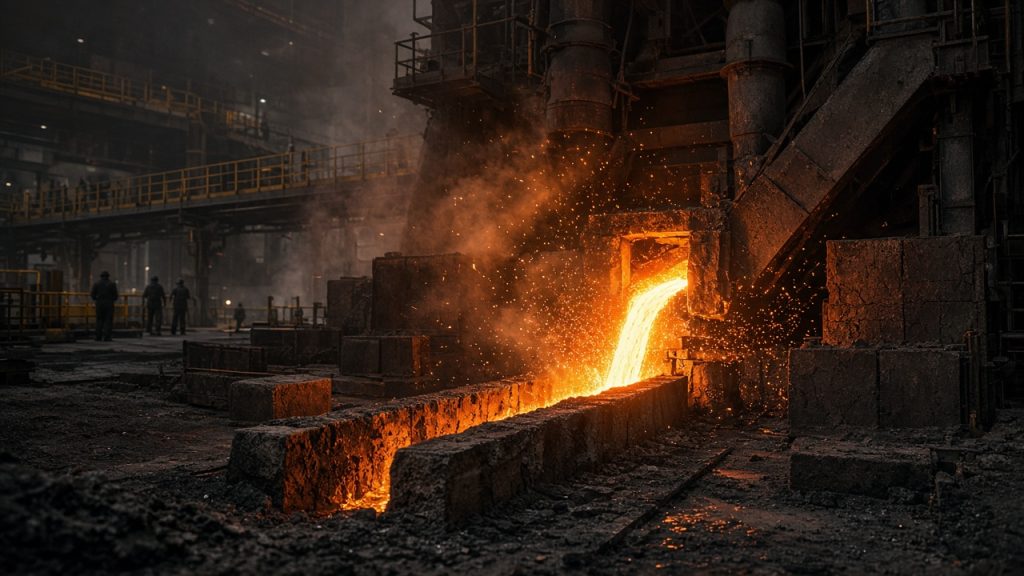
Hüttenwerke Krupp Mannesmann (HKM), now part of Salzgitter, has permanently shut Blast Furnace A in Duisburg after 53 years. The site’s capacity falls to 2.5 million tonnes a year from 2027, first from the remaining blast furnace and later from an electric arc furnace due in 2029.
What happened
Salzgitter said on 21 September 2026 that the final tap at Blast Furnace A had taken place “last Saturday” (Salzgitter release), which by our reading of the date was 19 September. The furnace first ran in 1973 and produced around 93 million tonnes of pig iron over its life. A few days earlier HKM had also shut coke oven Battery 2.
Reach steel buyers and importers worldwide
Put your brand in front of the people who buy and trade steel.
Advertise with Loharo- Blast Furnace B was restarted a few weeks earlier after a reline lasting several months and now carries the site alone.
- HKM’s two furnaces made about 4 million tonnes of pig iron last year. Salzgitter expects about 3 million tonnes this year.
- From 2027 annual capacity will be up to 2.5 million tonnes.
- Construction of the replacement EAF started in August 2026. With a 285-tonne tap weight and up to 2.5 million tonnes a year, Salzgitter says it will be Germany’s largest EAF. It receives €200 million in federal and North Rhine-Westphalia funding and is due for completion in 2029.
thyssenkrupp, a former HKM shareholder, said its separation from HKM was completed in summer 2026 (thyssenkrupp release).
Why it matters for steel buyers
HKM supplies semi-finished steel to its owners’ downstream mills, including Salzgitter’s tube and plate businesses. Taking one of its two blast furnaces offline cuts about a million tonnes of pig iron from this year’s output and sets a lower ceiling from 2027. Together with ArcelorMittal’s planned Duisburg steel shop closure, the Ruhr is producing less of its own liquid steel.
For buyers of plate, line pipe and other HKM-fed products, the near-term risk is concentration: until 2029 the site depends on a single blast furnace. Any unplanned stop at Furnace B would hit semis supply directly. Our European capacity tracker puts this alongside other changes to EU supply.
What to watch
- Reliability of Blast Furnace B through to the EAF start.
- EAF construction milestones and power supply agreements for Duisburg.
- How Salzgitter splits HKM output between its own mills and outside customers now that thyssenkrupp has left.
Ask the Analyst
“500 t HRC from Turkey into Antwerp in January”: landed cost with duty, quota and CBAM in one answer.Ask the Analyst