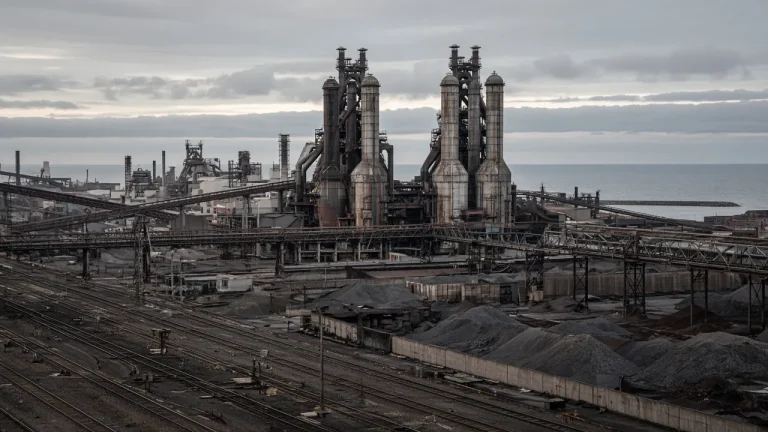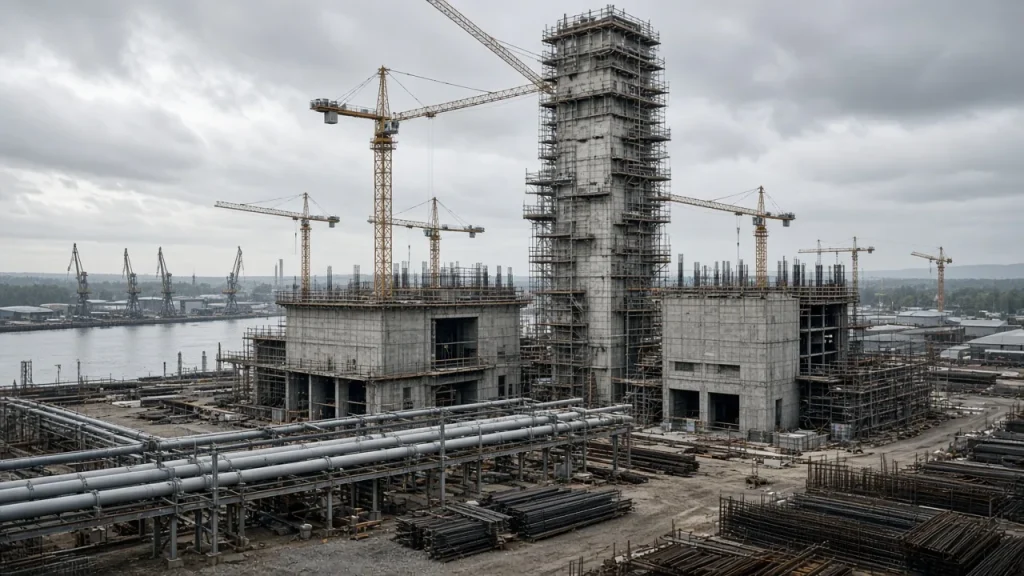
thyssenkrupp Steel can now run its new direct reduction plant in Duisburg on natural gas for longer before it switches to hydrogen. On 30 October the company said Germany had made revised funding terms for the plant final, after the European Commission confirmed they comply with EU state aid rules. For EU buyers of flat steel, this means the first low-CO₂ steel from the plant is likely to come from natural gas, not hydrogen. If you are negotiating low-CO₂ steel for 2028 or later, check now what CO₂ figure the supplier promises per tonne, and on what basis.
What thyssenkrupp announced
In its press release of 30 October, thyssenkrupp Steel said it had received the formal notice revising the grant for its tkH2Steel project. The new terms allow the share of hydrogen to rise gradually and more flexibly. The company gave two reasons: the hydrogen market has not developed as expected when the aid was first granted, with production, pipelines and imports not yet available at the scale needed, and green hydrogen costs much more than planned.
Reach steel buyers and importers worldwide
Put your brand in front of the people who buy and trade steel.
Advertise with LoharoThe plant can run on natural gas, hydrogen or a mix of the two. thyssenkrupp says natural gas alone cuts CO₂ by more than 50% compared with its current coal-based blast furnace route. Its goal of full hydrogen operation is unchanged, but it now depends on hydrogen supply, cost and customer demand. thyssenkrupp is preparing a new tender for long-term hydrogen supply, which it says will start shortly. Construction continues: the formwork, reinforcement and main concrete pours for the reduction tower and the two melters are done.
thyssenkrupp did not publish the new terms themselves, such as a new date for hydrogen use or any change to the amount of aid. The trade site gasworld also notes this (gasworld, 30 October). The Duisburg newspaper WAZ describes the change as a weakening of the project’s climate targets (WAZ, in German).
Loharo comparison: the plan in 2023 and now
| 2023 aid decision and plan | 30 October 2026 | |
|---|---|---|
| Aid | About €2 billion from the federal government and North Rhine-Westphalia: a grant of up to €550 million for the plant plus a conditional payment of up to €1.45 billion for using renewable hydrogen (European Commission) | Terms revised; thyssenkrupp gave no new amount |
| Fuel path | Start on natural gas, then phase it out; only renewable hydrogen from 2037 (European Commission). thyssenkrupp aimed for about 143,000 t of hydrogen a year as early as 2029 | Natural gas, hydrogen or a mix; hydrogen share rises with supply, cost and customer demand; no date given |
| Start-up | End of 2026 (thyssenkrupp, 2023) | Commissioning starts in 2027 (thyssenkrupp project site) |
| Capacity and CO₂ | 2.5 Mt a year of direct reduced iron (2.3 Mt of hot metal), saving up to 3.5 Mt of CO₂ a year | Same plant; more than 50% less CO₂ than the blast furnace route on natural gas alone |
| Hydrogen supply | Competitive tender to choose suppliers, monitored by Germany | A new tender is being prepared and will start shortly |
Analysis The Commission’s 2023 decision already allowed natural gas at the start. What has changed is the pace: the hydrogen switch no longer has a published timetable. The conditional payment of up to €1.45 billion was meant to cover the extra cost of renewable hydrogen during the plant’s first ten years. thyssenkrupp has not said how the revised terms treat that payment, so its effect on the hydrogen timetable is not yet known.
What it means for EU buyers
Analysis thyssenkrupp markets its low-CO₂ steel as bluemint Steel. In October 2024 it signed a memorandum of understanding to supply Volkswagen from 2028, and said the product can reach label A under the German steel industry’s LESS low-emission steel scheme when the plant runs on 100% renewable hydrogen (thyssenkrupp and Volkswagen). With no date now set for hydrogen, buyers should not assume label A steel in the first years. Natural gas still brings a large CO₂ cut, so the steel can still help buyers who report Scope 3 emissions, or carmakers if EU car CO₂ rules give credit for low-carbon steel (our report on that proposal).
Analysis For your contracts: if you are buying low-CO₂ flat steel for 2028 or later, link any premium to a certified CO₂ figure per tonne of product, and ask the supplier to name the method behind it. Agree what happens to the price if the steel delivered does not reach that figure. Do not link the premium to the share of hydrogen used, because thyssenkrupp has not published a date for that.
Stay ahead of the steel market
What to watch
- In the coming weeks: the start of thyssenkrupp’s new hydrogen tender, and any detail on volumes or dates.
- 2027: commissioning of the reduction plant in Duisburg.
- 2028: the planned start of bluemint Steel supplies to Volkswagen, and which LESS label those deliveries carry.
Verification status: Verified
- The revised terms, the reasons, the hydrogen tender and the construction progress come from thyssenkrupp Steel’s 30 October release, and SteelOrbis and gasworld report the same points. The 2023 aid amounts and fuel path come from the European Commission’s decision, and the start-up dates from thyssenkrupp. thyssenkrupp has not published the revised terms, and this article says so; the comparison and buyer guidance are Loharo analysis.
- Key: Verified = material factual claims are supported by an appropriate primary source or clearly attributed reporting/market assessments; Partially verified = a specific material claim remains unsupported, contradicted or materially overstated; Analysis = interpretation or forecast with sourced premises; Developing = material facts are checked but the situation is still changing.
Ask the Analyst
“500 t HRC from Turkey into Antwerp in January”: landed cost with duty, quota and CBAM in one answer.Ask the AnalystSources
Primary sources
- Definitive grant notice strengthens the ongoing tkH2Steel decarbonization project — thyssenkrupp Steel, 30 October 2026
- State aid: Commission approves German €550 million direct grant and conditional payment mechanism of up to €1.45 billion to support ThyssenKrupp Steel Europe — European Commission, 20 July 2023
- EU Commission approves German federal and state government funding for thyssenkrupp Steel’s tkH2Steel decarbonization project — thyssenkrupp Steel, 20 July 2023
- Transformation zu klimaneutralem Stahl (project site, in German) — thyssenkrupp Steel
- thyssenkrupp and Volkswagen Group sign memorandum of understanding to supply CO₂-reduced steel — thyssenkrupp
Supporting sources
- Germany allows Thyssenkrupp Steel to delay DRI switch to hydrogen — gasworld, 30 October 2026
- Thyssenkrupp Steel secures revised tkH2Steel funding terms for flexible hydrogen transition — SteelOrbis, 30 October 2026
- Thyssenkrupp darf länger Erdgas statt Wasserstoff in Duisburger Anlage einsetzen (in German) — WAZ, 30 October 2026
Related on Loharo
- EAF versus blast furnace: what the two routes mean for emissions, costs and the green steel premium
- EU Parliament groups back a low-carbon steel credit in car CO₂ rules
- Salzgitter’s new 380 kV line is live, removing a grid hurdle before its 2027 low-CO₂ steel start
- EU mills seek €100–150/t more for 2027 coil contracts; buyers expect €50–80/t
Last fact-check: 2 November 2026.